
We welcome the new Circular Economy Strategy and the World Environment Day recalling the value that biomass brings to the fundamental pillars of the new strategy - waste reduction and resource efficiency - and its key role in protecting forests.
The symbiosis between the forestry industry and bioenergy exists and works very well This has been happening for years in various sectors. For example, the activity of board factories or pulp mills combined with the cogeneration of electrical and thermal energy – generally for self-consumption – from their own by-products increases the overall efficiency of resource use and is a clear example of a circular economy.
Other good examples include wood-based product plants (sawmills, coils, pallets, etc.), where the lowest quality byproducts are used to generate process heat, the next highest quality byproducts to manufacture pellets, and the main raw material to obtain the final product. In this way, a closed loop is achieved. virtuous circle of resource utilization, minimizing dependence on fossil fuels.
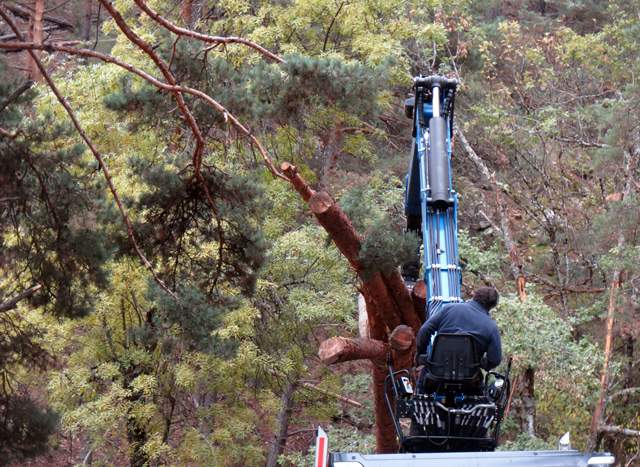
It is very noteworthy that synergy between electricity generation and reduction of forest fire risk This stems from the exploitation of forest biomass, which, accumulated in the forests, becomes a highly flammable and dangerous material. It's also important to remember that forest fires are responsible for 201% of carbon dioxide emissions from human activities.
Regarding agricultural biomass, its potential within the circular economy is immense; many byproducts previously considered waste are now becoming raw materials in other processes, such as energy generation. The project Agrobioheat, AVEBIOM participates in this project, which promotes the use of these agrobiomasses to obtain heat in facilities in rural areas.
Carbon rate and certifications
The use of biomass, a local source of renewable and sustainable energy, as a substitute for imported fossil fuels would be boosted by the implementation of a carbon tax, something that AVEBIOM has been advocating for this for years.
Process certifications, such as PEFC for forest management or INplus® y Biomasud In the more specific field of biomass for energy uses, they have been and are key to guaranteeing sustainability and the circular model.
As for modern combustion appliances, they are becoming increasingly efficient, guaranteeing lower biofuel consumption and minimal emissions, in accordance with the regulations of Ecodesign (in the case of low power installations) and the European directives and their respective national transpositions for medium combustion installations (1 – 50 MW) or more than 50 MW.
AVEBIOM, for its part, works to improve excellence in biomass facilities through the iBTc certification for thermal biomass installers.
Spanish Circular Economy Strategy:
https://www.miteco.gob.es/es/calidad-y-evaluacion-ambiental/temas/economia-circular/estrategia/